Blog
Flat Roofs: a complete guide for Ashtead homeowners
Flat roofs: a complete guide for Ashtead homeowners
Flat roofs are a common feature on Ashtead homes, from 1960s bungalows to modern rear extensions. This guide explains the main roof types, how to spot problems early, routine maintenance you can do yourself and what to expect when you call in a surveyor or roofing contractor.
Common flat roof types and where they suit
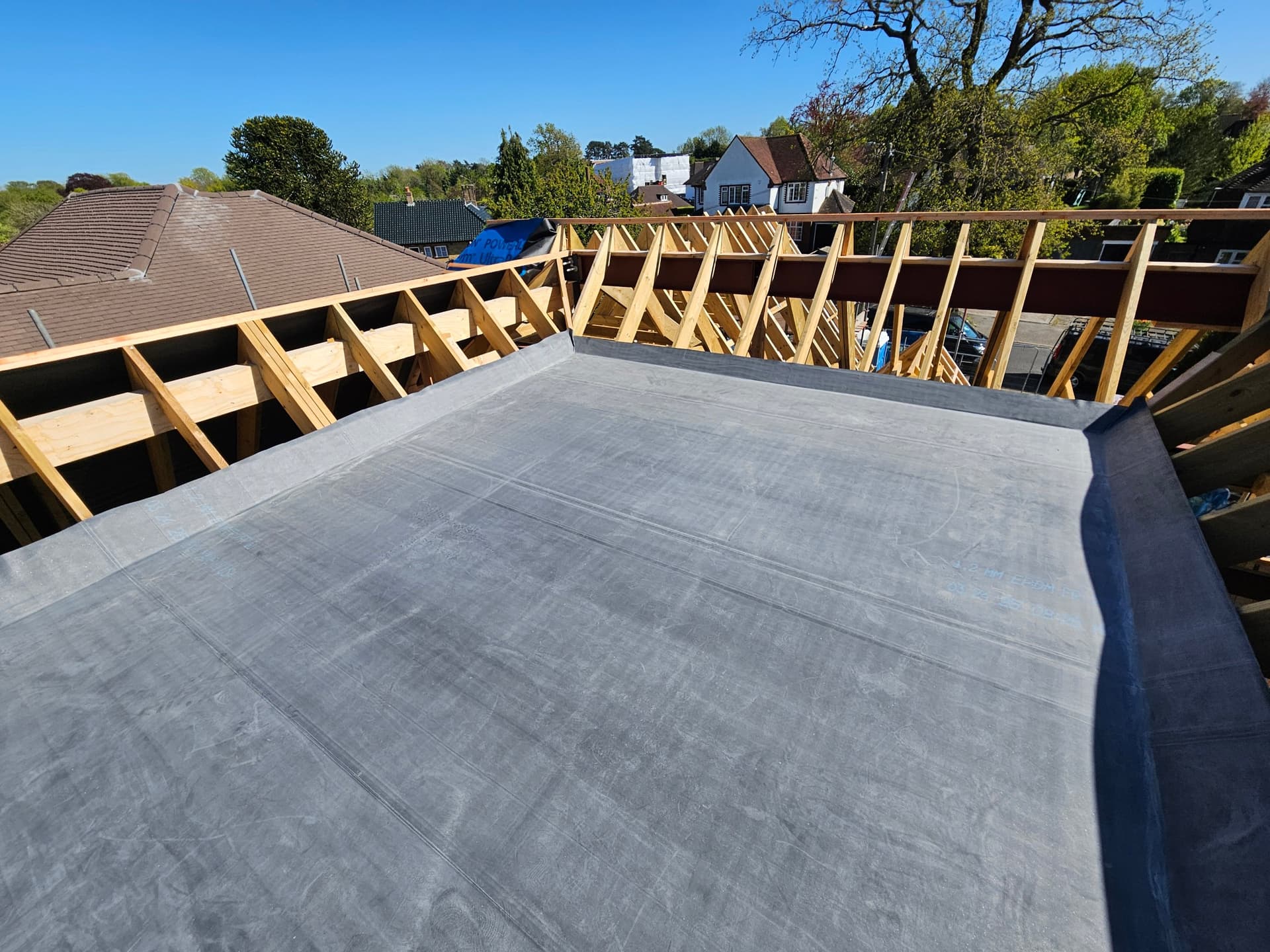
- Single ply membranes, such as EPDM or PVC, are lightweight and work well on new extensions and refurbished garage roofs. They are flexible and resist weathering.
- GRP fibreglass is ideal where a hard wearing, seamless finish is needed, for example on flat balconies or walkable roofs.
- Torch applied systems, sometimes called torch on felt, suit larger or pitched-flat transitions and where a robust waterproof layer is required.
- Traditional mineral felt is still used on many smaller roofs and outbuildings, though modern membranes often offer better durability.
- Inverted or warm roof constructions put insulation above the waterproofing. These are chosen where internal space or thermal performance matters.
Choosing the right system depends on roof access, fall, expected foot traffic, and the existing substrate. A professional survey will confirm the best option for your Ashtead property.
How to spot a failing flat roof
Early detection saves time and disruption. Look for these signs inside and out:
- Staining or blistering on ceilings and around skirtings
- Damp smells, mould or peeling paint on top floors
- Ponding water on the roof surface after rain
- Cracked or loose flashings and sealant around upstands and vents
- Rusted fixings or corroded outlets
- Vegetation growth, debris build up or sagging felt
If you see any of the above, arrange a survey. Emergency issues such as active leaking or sudden loss of cover should be reported for same day response.
Quick maintenance checklist for homeowners
Do this at least once a year and after heavy storms:
- Clear gutters and outlets to ensure water runs away freely
- Remove loose debris and moss from the roof surface
- Check all upstands, lead flashings and sealant joints for gaps
- Look for signs of movement around chimneys and parapet walls
- Photograph any areas of concern for the contractor
Do not walk on the roof unless you have protective boards and safe access. Flat roofs can disguise weak spots and damage can be made worse by incorrect access.
Temporary fixes you can use safely
For short term protection before a survey or repair:
- Clear the outlet if blocked, use a bucket and hose to check flow
- Place a tarpaulin over the worst area and weight it down well, avoiding cover over vents
- Apply roof repair tape or silicone patch to small splits, this is temporary only
Temporary measures reduce immediate damage. They do not replace a proper repair or replacement.
What a professional flat roof survey should cover
A good roofing contractor will provide a written survey and clear recommendations. Expect the survey to include:
- Photos and measured roof area
- Inspection of substrate, fall, insulation and vapour control layers
- Drainage condition including outlets and internal gutters
- Condition of upstands, flashings and lead work
- Recommended repairs or full strip and re-roof options
- Suggested materials and reasons, plus any planning considerations
- Details of workmanship and product guarantees
A detailed quote should list membrane type, insulation specification, upstand height, drainage work and exclusions. This transparency helps you compare options and plan the works.
Factors that affect repair or replacement decisions
- Accessibility and scaffolding requirements
- Extent of existing structural or timber decay
- Choice of membrane and insulation specification
- Roof fall and drainage arrangements
- Whether lead work, chimneys or parapet repairs are needed
- Any planning or party wall considerations for adjoining properties
These factors influence the scope of work and the length of any guarantee offered.
Prevent problems, extend life
Routine inspections, prompt clearing of gutters and quick response to ponding will extend the serviceable life of a flat roof. For properties in Ashtead and surrounding Surrey villages, exposure to driving rain and leaves from mature trees are common causes of blocked outlets and ponding. Keep gutters clear and check outlets after autumn.
Need help in Ashtead?
99 Building & Roofing has 20 years' experience working on domestic roofs across Ashtead and nearby towns. CSCS certified and fully insured, the team offers free quotes, product dependent guarantees and same day emergency callouts with WhatsApp enquiries on 07909 114109. For a written roof survey or to arrange a visit, email 99buildingandroofing@gmail.com.
If your flat roof shows signs of trouble or you are planning an upgrade, contact 99 Building & Roofing for an honest survey and clear recommendations tailored to your property.
Other Articles